LOADING...

support@tourpanda.in +91 8766373460

Tour Panda Insights

Explore beautiful destinations, dynamic travel packages, and expert guidelines.

Tour Panda Spiti Valley Trek 2026: Routes, Real Costs & Why This Year Has Fewer Crowds
Aug 29, 2026 By Admin
Spiti Valley Trek 2026: Routes, Real Costs & Why This Year Has Fewer Crowds

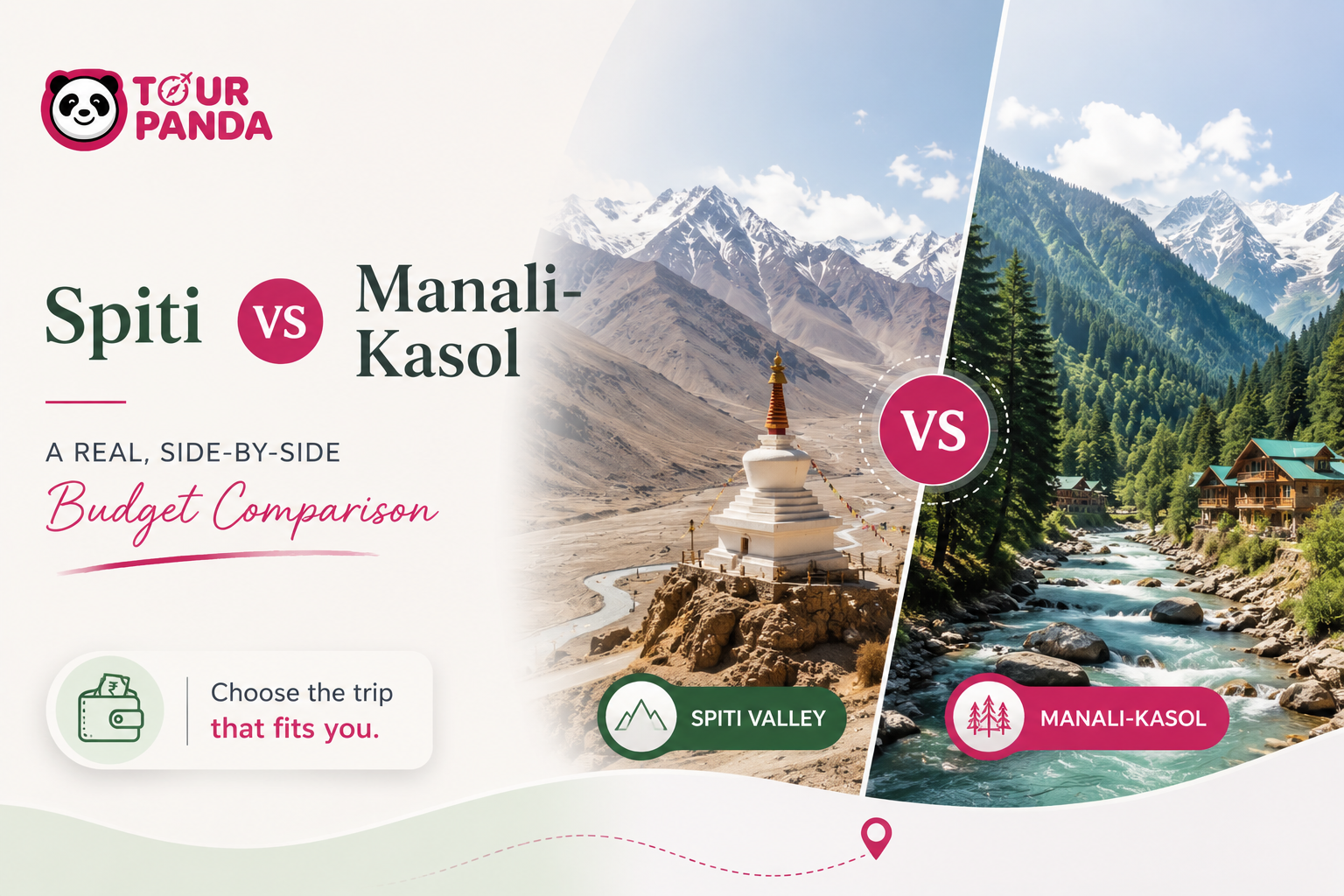
Spiti Valley sits in a remote corner of Himachal Pradesh where the Himalayas transform into a stark, high-altitude cold desert. Walking through villages perched above 13,000 feet, past turquoise rivers and thousand-year-old monasteries, delivers the kind of raw beauty that's increasingly hard to find in India's more popular hill destinations. Tour Panda's own guide breaks down exactly what to know before you go.Quick AnswerA Spiti Valley trek covers 40–55 km over 5–7 days, connecting high-altitude Buddhist villages like Langza, Hikkim, Komic, Demul, and Dhankar at elevations between 3,000 and 4,500 meters. The best window is mid-June to September. Budget ₹15,000–₹25,000 for a group package or ₹35,000–₹45,000 for a guided homestay trek. Enter via Shimla for gradual acclimatization.Why 2026 Genuinely Offers Fewer CrowdsOfficial data from the Himachal Pradesh Tourism Department shows that Lahaul-Spiti domestic tourist arrivals dropped over 53% in 2025 compared to 2024. For trekkers heading into Spiti in 2026, this means significantly fewer crowds, better homestay availability, and more authentic village experiences compared to the peak years of 2022–2024.Best Time to GoWindowWhat to ExpectMid-June – Mid-JulyPeak trekking season — dry trails, wildflowers, Kaza temperatures 10-20°C.Mid-July – AugustMonsoon reaches lower Himalayas; Spiti's rain-shadow geography limits rainfall, but approach-road landslides can disrupt travel.SeptemberPost-monsoon clarity, ideal for photography; 5-15°C daytime, below freezing at night.OctoberTrails begin closing as early snowfall blocks passes.The BRO confirmed Kunzum Pass (4,551 m) reopened for 4×4 vehicles on 12 May 2026, meaning the Manali–Kaza route becomes accessible from early June. For first-time trekkers, mid-June to mid-July offers the most reliable conditions.The Real 5-Day RouteDay 1: Kaza → Kibber → Langza (Trek: ~10 km). Drive to Kibber (4,205 m), one of the highest permanently inhabited villages in the world, then trek through Kibber Wildlife Sanctuary to Langza (4,400 m), known for its giant Buddha statue and marine fossils.Day 2: Langza → Hikkim → Komic (Trek: ~8 km). Walk to Hikkim (4,400 m), home to the world's highest post office, then continue to Komic (4,587 m), the world's highest motorable village.Day 3: Komic → Demul (Trek: ~10 km). Cross high-altitude meadows to Demul (4,200 m), known for community-based tourism and extraordinary night skies.Day 4: Demul → Lhalung → Dhankar (Trek: ~10 km). Descend to Lhalung, home to one of Spiti's oldest monasteries, then continue to Dhankar (3,894 m), where the fort monastery clings to a cliff above the Spiti-Pin confluence.Day 5: Dhankar → Tabo → Kaza (Drive: ~48 km). Visit Tabo Monastery, founded in 996 CE and often called the "Ajanta of the Himalayas," before returning to Kaza.Two Ways to Reach SpitiRouteDistanceBest ForManali → Kaza via Kunzum Pass~225 km, 10-12 hrsTrekkers already partially acclimatizedShimla → Reckong Peo → Nako → Kaza~420 km, 14-16 hrs over 2 daysFirst-timers wanting gradual altitude gain and lower AMS riskReal Cost BreakdownCategoryBudgetMid-RangePremiumTrek package₹15,000–₹18,000₹18,000–₹25,000₹35,000–₹45,000Transport (Delhi RT)₹2,500–₹4,000₹4,000–₹6,000IncludedTotal (approx.)₹20,000–₹25,000₹22,000–₹30,000₹35,000–₹45,000Group tours like Tour Panda's Born Ghumakkad 7-Day Spiti Valley Full Circuit, starting from ₹15,999, offer the best value for solo travelers and first-timers since transport, accommodation, guide fees, and most meals are bundled into the package price.Altitude Sickness: The Real Risk Worth Taking SeriouslyA peer-reviewed study published in High Altitude Medicine & Biology found that even lifelong residents of Spiti Valley show a 28.7% prevalence of Chronic Mountain Sickness, with rates higher in women (36.6%) than men (15.7%). If people who have lived here their entire lives are affected, visitors ascending from sea level need to take acclimatization seriously.Begin cardio-focused training 4–6 weeks before your trek.Follow the golden rule: climb high, sleep low.Take a rest day at Kalpa (2,960 m) or Nako (3,662 m) before entering Spiti.Stay hydrated (3–4 liters daily) and avoid alcohol for the first 48 hours at altitude.Ascend no more than 300–500 meters of sleeping elevation per day above 3,000 m.Consult your doctor about carrying Acetazolamide (Diamox) as a preventive measure.Warning signs: headache, nausea, and dizziness are common in the first 24 hours. But confusion, breathlessness at rest, or inability to walk a straight line are emergency signs — descend immediately.Essential Practical TipsConnectivity: BSNL postpaid is the only reliable mobile network in Spiti. Download offline maps before leaving Manali or Shimla.Cash: ATMs in Kaza are unreliable and often empty. Budget ₹1,000–₹1,500/day for incidentals.Permits: Indian nationals don't need special permits for most routes; foreign nationals require a Protected Area Permit for certain areas.Packing: Layered clothing (20°C day to -5°C night), sturdy trekking boots, down jacket, SPF 50+, water purification tablets, and altitude sickness medication.Cultural respect: Walk clockwise around monasteries and stupas; ask permission before photographing monks; remove shoes before entering monastery halls.The 2026 Shift Toward Community HomestaysVillages like Demul and Lhalung have developed community-managed homestay models that provide income directly to local families, giving trekkers a more immersive experience than a tented campsite — aligning with a broader industry shift toward responsible, community-centered adventure tourism.Start Planning Your Spiti Valley TrekA 7-day full circuit starting from ₹15,999, covering Kaza, Kibber, Langza, Hikkim, Komic, and Dhankar with expert guides and 24/7 support — from Tour Panda.Chat on WhatsApp →Frequently Asked QuestionsHow much does a Spiti Valley trek cost in 2026?A group trek package starts from approximately ₹15,999 for a 7-day full circuit. Mid-range organized treks cost ₹18,000–₹25,000, while guided homestay treks range from ₹35,000–₹45,000 per person.When is the best time to do a Spiti Valley trek?Mid-June to mid-July offers the most reliable conditions. September is excellent for clear skies and fewer crowds. Avoid August if concerned about landslide risk on approach roads.Is the Spiti Valley trek suitable for beginners?Yes, with proper preparation. No technical climbing is involved, but high altitude demands good cardiovascular fitness and proper acclimatization. Beginners should enter via Shimla for gradual altitude gain.Do I need permits for a Spiti Valley trek?Indian nationals generally don't need special permits for standard routes. Foreign nationals require a Protected Area Permit for certain areas. Always carry government-issued photo ID.Final ThoughtsA Spiti Valley trek is unlike anything else in the Indian Himalayas — walking between villages perched at 13,000 feet, sleeping in family-run homestays, and watching the Milky Way from a cold desert plateau at 4,000 meters. The 2026 season brings fewer crowds, stable road access, and competitive pricing, making this a genuinely good window to plan a trek.Whether you choose a budget group circuit or a premium guided homestay experience, the key is planning ahead: train your body, choose the right entry route, and work with verified operators who know the terrain. Tour Panda can build a customized itinerary around your dates, budget, and fitness level.Note: This article reflects information published by Tour Panda on tourpanda.in at the time of writing, including cited statistics from the Himachal Pradesh Tourism Department, the Border Roads Organisation, and a peer-reviewed study in High Altitude Medicine & Biology. Trek conditions, road access, and pricing may change; please confirm current details directly with Tour Panda before booking, and consult a doctor regarding altitude sickness prevention.© 2026 Tour Panda • tourpanda.in • support@tourpanda.in • +91-8766373460

Tour Panda Stop Booking With the First Agent You Find: Why Comparison Changes Everything
Aug 29, 2026 By Admin
Stop Booking With the First Agent You Find: Why Comparison Changes Everything

Most people planning a Himalayan trek or a Spiti Valley trip find one travel agent, like their price, and book. Tour Panda is built specifically around questioning that habit — because the second or third quote you never checked might have told a different story.A Smart Travel Comparison Platform, Not Just Another AgencyTourPanda is a smart travel comparison platform helping travelers discover, compare, and book the best tour packages with trusted travel agents. TourPanda makes travel booking more transparent, affordable, and hassle-free.Real Numbers Behind the Platform12k+Happy Travelers450+Tours Completed150+Destinations24/7Expert SupportSix Real Reasons the Comparison Model Actually WorksKYC-Verified AgentsEvery agent is PAN, GST & business-verified before listing on the platform.Compare & SaveSide-by-side comparison of up to 4 packages so you always get the best deal.Authentic ReviewsOnly confirmed travelers can leave reviews — 100% genuine ratings guaranteed.Secure PaymentsSSL + PCI DSS compliant payment gateway with instant booking confirmation.24/7 SupportTravel experts available round-the-clock via chat, call, or email.Price GuaranteeFind a cheaper price? They'll match it. No questions asked.Why "Up to 4 Packages" Is the Real Mechanism Worth UnderstandingBooking with a single agent means trusting one specific itinerary, one specific price, and one specific level of service — without any real point of comparison. Seeing up to 4 packages side by side for the same destination genuinely changes the decision: differences in inclusions, pricing, and agent reputation become visible before you commit, not after.Why "Only Confirmed Travelers Can Review" MattersFake or incentivized reviews are a genuine, widespread problem across travel booking generally. Restricting reviews specifically to confirmed travelers who've actually completed a booking removes a major source of unreliable feedback, making the review signal genuinely more trustworthy than an open, unrestricted review system.A Real, Specific Destination RangeCategoryReal ExamplesHimalayan TreksKedarnath Trek, Hampta Pass, Kheerganga, Valley of Flowers, Everest Base CampPopular Hill DestinationsManali, Kasol, Spiti Valley, Chopta, Kashmir, GulmargPilgrimageChar Dham, Do Dham, Kedarnath Dham, Hemkund SahibInternationalVietnam (Sapa), Thailand, BaliThis range spans over 150 destinations — genuinely broad coverage, from technical Himalayan treks through to international honeymoon packages, rather than a narrow specialization in a single travel category.Real Featured Packages, Real PricingManali, Rohtang & Kasol Group Trip4 Days, Group — Starting from ₹5,999Spiti Valley Full Circuit7 Days, Group — Starting from ₹15,999Valley of Flowers6 Days, Group — Starting from ₹9,000Real Traveler Accounts"Wanted to thank you Nidhi & Raj for arranging our wonderful memorable Spiti trip. The hotel in Kalpa, Kaza & Rakchham was at ultimate location, close enough to the riverside and with mesmerising mountain view."— Abhishek Singh"This is my first solo trip and I'm so happy that I did it. Everything is so well planned and graceful. Hotels are close enough to snow mountain, waterfalls and Kheerganga trek was worth it."— Nakul RathodMeet the People Behind the PlatformTour Panda is led by Raj Vikram Singh, CEO & Co-Founder, and Nidhi Singh, COO & Co-Founder — real, named leadership directly credited in traveler testimonials for specific trip arrangements, not an anonymous corporate presence.Why the Agent Network Model Extends the Platform's ReachJoin our network and take your travel business to new heights. We offer competitive commissions along with dedicated 24/7 support to help you grow.High commission rates, an agent dashboard for managing bookings, and dedicated support reflect a genuine two-sided marketplace — the platform's value depends on attracting quality agents just as much as travelers, and this agent-facing offering exists specifically to grow that verified network.A Practical Checklist for Booking Your Next TripDon't settle for the first quote you receive. Compare up to 4 packages before deciding.Check that your agent is genuinely KYC-verified. PAN, GST, and business verification reflect real accountability.Read reviews specifically from confirmed travelers. This filters out unreliable or incentivized feedback.Confirm the cancellation policy upfront. Cancellations made at least 15 days in advance are typically eligible for standard refunds, though terms vary by destination.Ask about visa assistance if traveling internationally. Documentation support and interview preparation are available.Compare Before You CommitKYC-verified agents, side-by-side package comparison, and a price guarantee — plan your next adventure with Tour Panda.Chat on WhatsApp →Frequently Asked QuestionsHow do I book a custom tour package?Fill out the booking form on the website or connect with travel experts directly via WhatsApp; the itinerary is tailored to your preferences and requirements.What's the cancellation policy?Policies vary by destination and hotel terms. Typically, cancellations made at least 15 days in advance are eligible for a standard refund, with full details shared at booking.Does Tour Panda provide visa assistance?Yes — comprehensive visa assistance, including documentation support and interview preparation.How many agents does Tour Panda verify?Every listed agent undergoes PAN, GST, and business verification before appearing on the platform.Final ThoughtsBooking with the first agent you find skips exactly the step that most protects a traveler — genuine comparison. Seeing up to 4 verified agent packages side by side, backed by authentic, confirmed-only reviews and a price guarantee, turns trip planning into an informed decision rather than a gamble on the first quote received.With over 150 destinations, 12,000+ happy travelers, and a KYC-verified agent network, Tour Panda makes comparison the default, not an extra step most travelers skip.Note: This article reflects information, packages, and testimonials published by Tour Panda on tourpanda.in at the time of writing. Package availability and pricing may vary; please contact Tour Panda directly for current details.© 2026 Tour Panda • tourpanda.in • support@tourpanda.in • +91-8766373460

Tour Panda
Tour Panda Exploration
Aug 27, 2026 By Admin
Book Tour Packages Online with Verified Travel Agents

Book Tour Packages Online with Verified Travel Agents: The 2026 Buyer's Guide to India Tour Operators Introduction India's online tour package market has never been bigger, but it has also never been harder to navigate. With dozens of OTAs, full-service tour operators, and aggregator platforms all claiming "best price" and "trusted service," the buyer is left doing the verification work themselves. In 2026, deciding where to book tour packages online comes down to a single question: can you independently verify the people taking your money? This guide answers that question with a vetted 10-operator shortlist, INR pricing benchmarks, an IATA/IATO trust checklist, and a side-by-side comparison framework designed to reduce decision fatigue. TL;DR / Quick Answer To book tour packages online in India in 2026, shortlist operators that display verifiable IATA or IATO credentials, transparent GST-inclusive INR pricing, and authentic confirmed-traveler reviews. Match your budget tier (Budget ₹8k–15k/day, Mid-Range ₹15k–30k/day, Luxury ₹30k+/day) to the right archetype: Thomas Cook and SOTC for full-service trust, Yatra and MakeMyTrip for budget self-booking, Veena World and Kesari for guided groups, and aggregator platforms for side-by-side comparison. Always confirm monument-fee policy, GST treatment, and cancellation terms in writing before paying. Table of Contents Why Comparing Online Tour Packages Is Hard in 2026 Top 10 Online Tour Package Operators in India INR Pricing Breakdown: Budget vs Mid-Range vs Luxury Operator-by-Operator Deep Dive Trust & Certification Checklist Hidden Costs to Watch Seasonality Calendar Cancellation, Refund & Travel Insurance Solo Women, Senior & Family-Friendly Filters Best Online Deals: EMI, UPI Cashback & Bank Offers Final Verdict FAQs Why 'Book tour packages online' Is Hard to Compare in 2026 Online tour booking has scaled faster than consumer protection. The U.S. Federal Trade Commission recorded 14,263 vacation and travel fraud reports in Q3 2025 alone, with collective losses of roughly $40 million, an 18% jump over the previous quarter, with peak summer booking the most exposed window. McAfee's 2025 survey of more than 7,000 adults across seven countries found that 1 in 5 Americans has fallen for a travel scam while booking, and 13% of victims lost more than $500. This is the operating environment for anyone trying to book tour packages online from India. The same fake listings, spoofed confirmation emails, and AI-altered photos are circulating in the Indian market. On top of that, every major OTA now claims "lowest price," "verified agents," and "24/7 support," making superficial comparisons meaningless. The only durable defense is independent credentialing (IATA, IATO, Ministry of Tourism registration) and authentic reviews from confirmed travelers. To see how a verified-traveler model works in practice, you can browse Tour Panda customer success stories and reviews for an example of a review-by-confirmed-booking approach. Top 10 Online Tour Package Operators in India (Quick Comparison Table) Below is a snapshot of the 10 most-searched Indian tour package operators in 2026. Pricing is indicative and reflects 5N/6D domestic packages on a per-person, twin-sharing basis. #OperatorArchetypeIndicative 5N/6D Price (per person)Self-Booking or AssistedInternational Tours 1Thomas Cook IndiaFull-service legacy₹35,000–₹85,000AssistedYes 2MakeMyTripOTA + packages₹18,000–₹55,000BothYes 3SOTC TravelFull-service legacy₹30,000–₹75,000AssistedYes 4Yatra.comOTA + packages₹15,000–₹45,000Self-bookingYes 5Veena WorldGuided group tours₹45,000–₹1,20,000AssistedYes 6Kesari ToursGuided group tours₹40,000–₹95,000AssistedYes 7IRCTC TourismGovt-run tourism₹12,000–₹40,000BothLimited 8TravelTriangleAggregator₹14,000–₹60,000BothYes 9CleartripOTA + packages₹16,000–₹50,000Self-bookingYes 10Cox & Kings (revived)Full-service legacy₹38,000–₹90,000AssistedYes If you prefer a single screen showing up to four packages at once, the Tour Panda travel comparison platform uses a similar comparison format but filters for KYC-verified agents only. INR Pricing Breakdown: Budget vs Mid-Range vs Luxury Packages What your daily budget actually buys has shifted in 2026. Hotel input costs, fuel surcharges, and monument entry fees have all moved, so tier definitions need to be revisited before you book tour packages online. Use the table below as a realistic starting frame, not a quote. TierDaily Budget (per person)Hotel EquivalentTransportTypical Inclusions Budget₹8,000–₹15,0002–3★Shared coach/trainsStay, breakfast, transfers, sightseeing Mid-Range₹15,000–₹30,0003–4★Private sedan/SUVStay, breakfast + 1 dinner, transfers, guide Luxury₹30,000+4–5★Private SUV/business classStay, all meals, premium transfers, dedicated guide A 5N/6D mid-range Golden Triangle (Delhi-Agra-Jaipur) tour typically lands in the ₹22,000–₹35,000 per-person band, while a luxury Kerala houseboat plus Munnar package starts closer to ₹55,000–₹90,000 per person. Use a Tour Panda side-by-side package comparison tool to plug in your destination, duration, and traveler type and benchmark across these tiers in real time. Operator-by-Operator Deep Dive A two-line note per operator is more useful than a marketing summary, so here is what each does best, and where the friction usually appears when you book tour packages online. Thomas Cook India – Best for travellers who want a single point of accountability and a wide international network. Expect premium pricing, structured itineraries, and post-booking support that holds up. MakeMyTrip – Best for self-bookers comparing flights, hotels, and packages in one cart. Look for the "Package" tab (not "Holidays") to avoid dynamic pricing on standalone hotels. SOTC Travel – Closest peer to Thomas Cook, with strong group departures and family circuits. Check for in-house tour managers vs. contracted local guides. Yatra – Aggressive budget pricing and frequent flash sales. Read the fine print on "land package only" rates that exclude flights. Veena World – Predominantly guided group tours with a strong repeat-customer base. Pricing is inclusive but per-person supplements apply for solo travellers. Kesari Tours – Similar to Veena World with a strong Maharashtra and South India footprint. Good for senior-friendly group departures. IRCTC Tourism – Government-run, competitively priced, and well-suited to rail-based circuits like the Buddhist trail and Char Dham. Limited international inventory. TravelTriangle – Aggregator model that quotes multiple agents. Recent Trustpilot and consumer feedback around post-booking support has been mixed, so always verify the responding agent's credentials before paying. Cleartrip – Clean UX, decent mid-range package inventory. Strong for flight-led bookings with add-on hotels. Cox & Kings (revived) – Re-entered the market post-restructuring; verify current IATA and refund-escrow arrangements before booking. If you would rather skip the operator-by-operator homework, you can book tour packages online with Tour Panda and receive a curated shortlist from KYC-verified agents matched to your route and budget. Trust & Certification Checklist (IATA, IATO, Ministry of Tourism) Before you book tour packages online, run the operator through this five-point trust filter. IATA accreditation – IATA-registered agents can issue tickets through the BSP settlement system, a baseline of legitimacy. Verify the numeric code on the IATA directory. IATO (Indian Association of Tour Operators) membership – A recognised Indian industry body. Active membership is renewable annually. Ministry of Tourism (MoT) approval – Look for the MoT logo and registration number on the operator's footer; cross-check on the Ministry's official list. GSTIN and PAN – A legitimate operator will share both on request and match them across invoices. Authentic reviews – Reviews must come from confirmed travellers with a booking ID, not anonymous text submissions. Platforms that systematically enforce credentialing shorten this checklist for you. For example, Tour Panda's KYC-verified tour agents are PAN, GST, and business-verified before listing, which removes two manual checks from your workflow. Hidden Costs to Watch: GST, Fuel, Tolls, Monument Fees Most "starting from" prices you see while booking tour packages online exclude a stack of real costs. Before you pay, ask the operator to send a written, line-itemed quote that includes: GST – 5% GST on standalone hotel tariffs; 18% on tour packages that bundle transport and stay. Confirm whether the displayed price is inclusive or exclusive. Fuel surcharge – Typically ₹1,500–₹4,000 per vehicle for a 5N/6D trip; volatile in 2026. Toll and state entry tax – Variable by state; some operators absorb these, others pass them through. Monument entry fees – Indian nationals and foreign tourists pay different rates at ASI monuments. A package that quotes the foreign-tariff price to an Indian customer is a red flag. Guide, camera, and activity fees – Often excluded; can add ₹1,000–₹3,000 per person per day. Personal expenses, tips, and optional activities – Not always itemised. A platform like Tour Panda, which advertises transparent pricing with no hidden costs, builds a culture of disclosure, but you should still request the final invoice in writing. Seasonality Calendar: Best Month to Book Each Indian Destination Indian tourism has very specific windows. Booking the right destination in the wrong month is the single most common reason travellers come back disappointed. DestinationPeak SeasonShoulder SeasonOff-Season (monsoon/closed) Golden Triangle (Delhi-Agra-Jaipur)Oct–MarSep, AprMay–Jun (heat) Kerala backwatersSep–MarAugJun–Jul (heavy rain) Rajasthan (extended)Oct–MarAprMay–Jul Himachal (Shimla, Manali)Apr–Jun, DecMar, Sep–NovJul–Aug (landslide risk) LadakhJun–SepMay, OctNov–Apr (closed) GoaNov–FebMar, OctJun–Sep (monsoon) AndamansNov–MayJunJul–Sep (ferry disruptions) Kashmir & GulmargDec–Mar (snow), Apr–Jun (meadows)Oct, NovJul–Aug Northeast (Meghalaya, Tawang)Oct–May–Jun–Sep Valley of FlowersJul–Aug (bloom only)–Sep–Jun (closed by snow) L.E.K. Consulting's September 2025 travel survey found that 85% of consumers still prefer to use a human travel agent, even as AI tools flood the booking journey, especially for season-sensitive itineraries where local context matters. Use that human input to your advantage before you book tour packages online. Cancellation, Refund & Travel Insurance Policy Comparison Cancellation is where most online tour package disputes originate. The headline price rarely tells you how the operator behaves when plans change. Before you book tour packages online, ask for the cancellation matrix in writing, ideally in a table that maps days-before-departure to refund percentage. A few things to confirm: Staggered refunds – A reasonable policy refunds 90%+ if you cancel 30+ days out, sliding down to 25–50% within 15 days, and 0% within 7 days. Some operators offer 100% refund on the tour component (excluding flights) up to 21 days out. Force majeure – COVID-era refinements still vary. Lockdown, natural disaster, or airline cancellation should trigger full credit or refund. Travel insurance bundle – A ₹400–₹900 per-person policy that covers medical, trip cancellation, and baggage is worth adding, especially for international packages. Refund mode and timeline – Original payment mode, processed within 7–15 working days is the norm; longer windows are a red flag. Because cancellation policy is dynamic and depends on the agent and package, the safest path is to confirm it during checkout. You can review the principles that Tour Panda applies to cancellations and refunds as a reference, but the final terms will always be package-specific. Solo Women, Senior Citizen & Family-Friendly Filters A 2026 booking experience that ignores traveller identity is incomplete. When you book tour packages online, look for these filters: Solo women – Women-only departures, pre-vetted hotels, airport-to-airport transfers, and 24/7 emergency contact. Veena World, Kesari, and several aggregators run women-only batches; always ask. Senior citizens – Non-strenuous itineraries, doctor-on-call, ground-floor rooms, accessible transport, and a relaxed pace. Avoid "express" circuits with multiple 8-hour drive days. Families – Family-room availability, child pricing, kid-friendly meal options, and reduced or waived entry fees for minors at monuments. If you want a curated shortlist that has already been filtered along these lines, Tour Panda's solo women and senior citizen friendly tour options bundle these filters into the search, which saves substantial time during comparison. Best Online Deals: EMI, UPI Cashback & Bank Offers (2026) The "best price" headline is rarely the actual out-of-pocket cost. Stack offers to bring the real price down. No-cost EMI – Available on most OTAs and aggregator platforms for bookings above ₹10,000, with tenures of 3, 6, 9, and 12 months. Bajaj Finserv, HDFC, ICICI, and Axis cards are the most commonly enabled issuers. UPI cashback – PhonePe, Google Pay, and Paytm routinely run ₹500–₹1,500 cashback on tour bookings above ₹20,000. Check the cashback cap before you assume the offer applies at your price point. Bank card instant discounts – HDFC, ICICI, and SBI regularly run 10% off (capped at ₹2,000–₹3,000) on travel categories. Check your card's "Travel" or "Holiday" MCC. Loyalty points – Air India Maharaja points, Marriott Bonvoy, and ITC Culinaire are sometimes convertible against tour packages at 0.5–1.0 paise per point. For real-time offer support and verification before you pay, you can contact Tour Panda's 24/7 travel support to confirm which offer stack applies to your specific package. Final Verdict: Which Online Tour Package Should You Book? The right answer depends on what you value most. For full-service peace of mind – Thomas Cook India, SOTC, and Veena World remain the safest picks. For self-booking and price discovery – MakeMyTrip, Yatra, and Cleartrip lead on UX and offer stacking. For aggregator-style comparison – TravelTriangle (with caveats) and Tour Panda (KYC-verified agents) both serve buyers who want to compare first and pay second. For budget and government-backed reliability – IRCTC Tourism is unmatched on rail circuits and Char Dham packages. If you would like a single starting point that already filters for KYC-verified agents, transparent pricing, and 24/7 support, you can get a personalized itinerary from Tour Panda in under 10 minutes via WhatsApp or the booking form. FAQs on Booking India Tour Packages Online How do I book tour packages online safely in India in 2026? Use only operators that display verifiable IATA, IATO, or Ministry of Tourism credentials, and pay through a gateway that shows SSL and PCI DSS compliance. Always request a GST-inclusive written quote before payment. What is a realistic per-person budget for a 5N/6D India tour package? Budget circuits start around ₹8,000–₹15,000 per person per day, mid-range sits between ₹15,000–₹30,000, and luxury circuits begin at ₹30,000+ per day. These are indicative and vary by season. Which is the cheapest trusted operator to book tour packages online with? Among trusted operators, Yatra and MakeMyTrip consistently run the most aggressive base pricing, while IRCTC Tourism offers strong value on government-run circuits. Always check the final GST-inclusive price. Are online tour package reviews reliable? Only when they are tied to a confirmed booking ID. Anonymous reviews on third-party sites are easy to manipulate. Verified-traveler review models are a stronger signal. What hidden costs should I expect when I book tour packages online? GST (5% or 18%), fuel surcharge, tolls, monument entry (separate Indian and foreign rates), guide and camera fees, and personal expenses. Ask for a line-itemed quote. Can I cancel a tour package booked online and get a full refund? Most operators offer staggered refunds (90%+ for cancellations 30+ days out, sliding to 0% within 7 days). Refund timelines and force-majeure clauses vary, so confirm before paying. Conclusion The cleanest path to book tour packages online in 2026 is to treat the process like a procurement decision: shortlist by verified credentials, benchmark by indicative INR tier, and validate by authentic confirmed-traveler reviews. The 10-operator framework, the IATA/IATO checklist, the seasonality calendar, and the hidden-cost table above give you everything needed to compare on equal terms. When you are ready, fill the booking form or message a verified travel expert on WhatsApp, and turn your shortlisted itinerary into an actual departure date.

Tour Panda
Tour Panda Exploration
Aug 27, 2026 By Admin
Best Trek Packages India | Compare & Book on TourPanda

Best Trek Packages India: 2026 Buyer's Guide & ComparisonIndia's trekking scene has quietly become one of the most competitive travel categories in the country. With domestic tourist visits crossing 2.94 billion in 2024 according to the Ministry of Tourism's India Tourism Data Compendium 2025, more Indians than ever are hunting for the best trek packages India has to offer — and operators are responding with everything from budget weekend escapes to remote Himalayan circuits. But the explosion of options also makes choosing harder. Prices vary wildly, inclusions are rarely apples-to-apples, and "verified" gets thrown around without much substance behind it.This guide cuts through that noise.

Tour Panda
Tour Panda Exploration
Aug 27, 2026 By Admin
Manali Kasol Tour Package: Plan Your Himalayan Escape

Manali Kasol Tour Package: Plan Your Himalayan Escape in 2026Picture pine-scented valleys, the roar of the Parvati, and snow-capped peaks greeting you every morning. That is exactly what a Manali Kasol tour package delivers - the two most-loved Himalayan experiences stitched into one trip. With Himachal Pradesh crossing 30 million tourists for the first time in 2025 and Kullu district alone attracting 27 lakh visitors, these valleys are no longer hidden gems. They are mainstream bucket-list destinations, which means smart planning matters more than ever. In this guide, you'll find the route, itinerary, best season, real costs, and honest tips for planning your Manali Kasol escape in 2026.TL;DR / Quick AnswerA Manali Kasol tour package is a 4 to 7-day Himalayan holiday combining the adventure hub of Manali with the laid-back Parvati Valley village of Kasol. The ideal windows are September to November and March to June, costs range from ₹5,999 for group departures to ₹20,000+ for customised trips, and the direct Manali-to-Kasol route covers roughly 75 km. Book 4-6 weeks ahead in 2026 to avoid peak-season crowds and the Atal Tunnel bottlenecks.Table of ContentsManali Kasol Tour Package: An OverviewRoute, Distance & How the Manali-Kasol Circuit WorksBest Time to Book a Manali Kasol Tour PackageManali Kasol Tour Package Itinerary (Day-by-Day)Manali Kasol Tour Package Cost BreakdownHow to Reach Manani and KasolStays, Homestays & Food on the RoutePreparation, Fitness & Expert Tips1. Manali Kasol Tour Package: An OverviewA Manali Kasol tour package is essentially a curated Himalayan circuit that strings together two contrasting experiences. Manali, sitting at about 2,050 m in the Kullu valley, is the region's commercial adventure hub - think Mall Road cafés, Solang Valley activities, and access to the Atal Tunnel. Kasol, just 75 km away but worlds apart in vibe, is a small Parvati Valley hamlet loved for its Israeli cafés, pine forests, and trailheads to Kheerganga, Tosh, and Malana.In 2026, more Indian travellers than ever are booking these combined circuits. The Himachal Pradesh Tourism Department confirmed that the state crossed 30 million visitors in 2025, with Kullu district - home to both towns - drawing 27 lakh (2.7 million) tourists and overtaking Shimla. Manali alone pulls in roughly 30 lakh visitors each year, which is why packages that bundle logistics, stays, and permits save real time.Most itineraries fall into three buckets: a 4-day group departure, a 5 to 6-day mid-range trip, and a 7-day plus extension into Spiti. If you're comparing options, the smartest move is to compare Manali Kasol tour packages side-by-side so you can weigh inclusions, group size, and stay standards before paying.2. Route, Distance & How the Manali-Kasol Circuit WorksThe Manali to Kasol route runs roughly 75 km if you take the direct Manali-Bhuntar-Kasol road, or up to 220 km when you loop through the Atal Tunnel to Keylong and back. The shorter path is what almost every Manali Kasol tour package follows on Day 1 after arrival.The standard circuit looks like this: Delhi → Chandigarh → Mandi → Kullu → Manali (≈540 km, overnight Volvo or private car) → Naggar or Old Manali base day → drive to Kasol via Bhuntar (≈3 hrs) → Kasol base day → optional Tosh or Kheerganga day trek → return drive to Delhi. Add 2 to 3 extra days and the same package can extend through the Atal Tunnel toward Keylong, Jispa, or Spiti.Distance and travel time matter more than people realise. Atal Tunnel data from the Border Roads Organisation shows the tunnel was built for 4,500 vehicles per day but is now handling about 11,000, creating 4 to 8 hour standstills on the Manali-Leh axis during peak weeks. Unless your itinerary specifically mentions Lahaul-Spiti, stay on the Manali-Kasol axis to avoid losing a day in tunnel traffic.For travellers who like having someone else plan the logistics, group-format Himalayan trek packages take care of permits, stays, and driver coordination in one bundle.3. Best Time to Book a Manali Kasol Tour PackageTiming is the single biggest decision you'll make. Three windows work well, and one is genuinely risky.September to November is the sweet spot. Monsoon is over, the Parvati is clear, apple orchards are in season, and crowds thin out after October. This is the window locals recommend for the Kheerganga trek. March to June is peak season - snow at Solang and Rohtang, lively café scene in Old Manali, but expect Mall Road traffic jams and fully booked stays. December to February brings snow but closes many high passes, including Rohtang without a special permit.July to September is the window you should treat with caution. Official Kullu tourism data published in The Tribune showed Indian tourist arrivals to Kullu-Manali cratering from 4,92,533 in June 2025 to just 72,670 in July, 28,196 in August, and 12,238 in September - a 97% drop caused by catastrophic monsoon-triggered landslides on the Chandigarh-Manali highway. If you must travel in monsoon, add a 2-day buffer and buy travel insurance that covers road-closure extensions.Foreign tourist arrivals in Kullu also fell 20.37% for the full year (from 13,295 in 2024 to 10,587 in 2025), so 2026 bookings are likely to surge among domestic travellers. Plan weekday departures, explore Tour Panda travel blog for live seasonal updates, and lock rooms 4 to 6 weeks in advance.4. Manali Kasol Tour Package Itinerary (Day-by-Day)A balanced 5-day Manali Kasol tour package looks roughly like this, and works for first-timers, couples, and small groups.Day 1 - Delhi to Manali: Overnight Volvo or private car from Delhi, arrival next morning, check-in to a Manali hotel, Mall Road orientation walk.Day 2 - Manali local + Solang Valley: Visit Hadimba Temple, Old Manali cafés, drive to Solang Valley for paragliding, zorbing, or the ropeway. Snow activities if visiting March-May.Day 3 - Manali to Kasol (75 km, ~3 hrs): Morning departure after breakfast, stop at Bhuntar and Kullu for shawl shopping, reach Kasol by afternoon. Walk the riverside, settle into a homestay, evening bonfire.Day 4 - Kasol to Tosh or Kheerganga trek: Half-day option is Tosh (30 min drive, easy 4 km walk). Full-day option is the Kheerganga trek (12 km round trip, 3,050 m altitude, hot springs at the top). Beginners should pick Tosh.Day 5 - Kasol to Delhi: Morning departure, overnight journey back, drop-off by next morning.If you have a week, add an Atal Tunnel day with a Keylong visit, or extend straight into the Born Ghumakkad 7 Days Spiti Valley Full Circuit starting from ₹15,999. The cleanest way to confirm inclusions is to Book your Manali Kasol tour package through a platform that lets you customise each day before paying.5. Manali Kasol Tour Package Cost BreakdownA realistic Manali Kasol tour package cost in 2026 sits between ₹5,999 for a budget group departure and ₹20,000 to ₹35,000 for a mid-range private trip. Here's how the breakdown usually works.Cost ComponentBudget (per person)Mid-Range (per person)Premium (per person)Transport (Delhi-Manali-Delhi Volvo + local)₹2,500₹4,500₹7,000 (private car)Stay (4 nights, twin sharing)₹1,500₹4,000₹9,000 (premium cottage)Food (4 days)₹1,000₹2,000₹3,500Activities (paragliding, ropeway, Kheerganga)₹1,000₹2,000₹3,500Permit, guide, misc₹500₹1,000₹1,500Total₹6,500 - ₹8,000₹13,500 - ₹15,500₹24,500 - ₹35,000Group departures are the cheapest entry point. The Born Ghumakkad 4 Days Manali, Rohtang & Kasol tour starts from ₹5,999 per person and is the format most solo travellers and small friend groups pick. Customised private packages run higher because they include a personal vehicle and tighter stay standards.If you want a single number to anchor your planning, ₹6,000 to ₹8,000 per person for a no-frills group trip and ₹14,000 to ₹18,000 per person for a custom mid-range trip are the realistic 2026 bands. You can browse current rates and Tour Panda Manali Kasol tour package listings to compare side-by-side.6. How to Reach Manali and KasolReaching the Manali-Kasol corridor is straightforward, but the option you pick changes your comfort and total budget significantly.By air: The nearest airport is Bhuntar (KUU), about 50 km from Manali and 30 km from Kasol. Flights from Delhi take 1 hour 15 minutes but get cancelled in bad weather. Taxi from Bhuntar to Manali costs ₹1,500 to ₹2,000.By road from Delhi: This is the most common choice. Options include overnight Volvo buses (₹800 to ₹1,500 one-way, 12 to 14 hours), semi-sleeper private cars (₹10,000 to ₹14,000 one-way), or self-drive. The route runs Delhi → Panipat → Ambala → Chandigarh → Mandi → Kullu → Manali.By train: The closest major station is Chandigarh, 310 km from Manali. From there, take a bus or a hired taxi for 8 to 9 hours. There's no railway line into Manali yet.Within Manali to Kasol: Local HRTC buses run every 30 minutes during the day (₹120), or hire a shared taxi (₹400 per seat) or private cab

Tour Panda
Tour Panda Exploration
Aug 27, 2026 By Admin
Spiti Valley Trek: Routes, Cost & Travel Tips 2026

Spiti Valley Trek: Routes, Cost & Travel Tips 2026Spiti Valley sits in a remote corner of Himachal Pradesh where the Himalayas transform into a stark, high-altitude cold desert. Walking through villages perched above 13,000 feet, past turquoise rivers and ancient monasteries that have stood for over a thousand years, a Spiti Valley trek delivers the kind of raw, untouched beauty that's increasingly hard to find in India's popular hill destinations.But planning a trek here isn't straightforward. The terrain is unforgiving, the roads are seasonal, and altitude sickness is a real concern even for experienced hikers. This guide covers everything you need—routes, a day-by-day itinerary, costs, acclimatization strategies, and practical tips—to plan your Spiti Valley trek in 2026 with confidence.TL;DR / Quick AnswerA Spiti Valley trek covers 40–55 km over 5–7 days, connecting high-altitude Buddhist villages like Langza, Hikkim, Komic, Demul, and Dhankar at elevations between 3,000 and 4,500 meters. The best window is mid-June to September. Budget ₹15,000–₹25,000 for a group package or ₹35,000–₹45,000 for a guided homestay trek. Enter via Shimla for gradual acclimatization and fewer altitude-related complications.What Is the Spiti Valley Trek?Spiti Valley is a high-altitude cold desert nestled between India and Tibet in northeastern Himachal Pradesh. The name "Spiti" translates to "The Middle Land," a fitting description for a region that has historically served as a cultural bridge between the Indian subcontinent and the Tibetan plateau. Villages here sit at elevations between 3,000 and 4,200 meters, and the landscape is dominated by barren brown mountains, ancient rock formations, and rivers cutting through deep gorges.The Spiti Valley trek is not a single trail—it's a multi-day journey connecting remote villages, monasteries, and high passes on foot. Most treks cover between 40 and 55 km, with roughly 40 km done on foot and the rest by vehicle transfers between trailheads. The typical duration is 5 to 7 days. What makes this trek unique is the cultural dimension. You're walking between villages where Buddhist monks chant at dawn, where families open their homes as homestays, and where fossilized marine life sits exposed on mountaintops that were once ocean floors. If you're exploring Himalayan trek packages that combine adventure with cultural immersion, Spiti stands in a category of its own. Interestingly, official data from the Himachal Pradesh Tourism Department shows that Lahaul-Spiti domestic tourist arrivals dropped over 53% in 2025 compared to 2024, according to The Tribune India. For trekkers heading into Spiti in 2026, this means significantly fewer crowds, better homestay availability, and more authentic village experiences compared to the peak years of 2022–2024.Best Time for a Spiti Valley Trek in 2026The trekking window in Spiti is short and dictated by snow clearance on mountain passes. The primary season runs from mid-June through September. Mid-June to mid-July is peak trekking season—trails are dry, wildflowers bloom in the lower villages, and daytime temperatures in Kaza hover between 10°C and 20°C. The BRO confirmed that Kunzum Pass (4,551 m) reopened for 4×4 vehicles on 12 May 2026, according to High Diaries, which means the Manali–Kaza route is accessible from early June. Mid-July to August brings monsoon rains to the lower Himalayas, though Spiti's rain-shadow geography means it receives far less rainfall than Kullu or Manali. However, landslides on approach roads can disrupt travel plans, making this period better suited for experienced trekkers.September offers post-monsoon clarity ideal for photography and clear mountain views. Temperatures drop noticeably—expect 5°C to 15°C during the day and below freezing at night. Fewer tourists and crisp skies make it a favorite among repeat visitors. October sees trails beginning to close as early snowfall can block passes, with only lower-altitude stretches around Kaza and Tabo remaining accessible. For first-time trekkers, mid-June to mid-July offers the most reliable conditions. If you're flexible on dates, contact our travel experts to match your schedule with the optimal weather window for 2026.Spiti Valley Trek Routes and Day-by-Day ItineraryThe most popular Spiti Valley trek follows a circuit starting and ending in Kaza, the district headquarters. This route covers roughly 55 km—approximately 41.5 km on foot and 13.5 km by vehicle transfers between disconnected trail sections. Here's a proven 5-day itinerary:Day 1 – Kaza → Kibber → Langza (Trek: ~10 km): Drive from Kaza to Kibber (4,205 m), one of the highest permanently inhabited villages in the world. Trek through the Kibber Wildlife Sanctuary, crossing rocky ridges with views of the Spiti River valley. Descend to Langza (4,400 m), famous for its giant Buddha statue and marine fossils.Day 2 – Langza → Hikkim → Komic (Trek: ~8 km): A relatively easy walk to Hikkim (4,400 m), home to the world's highest post office—send a postcard from here. Continue to Komic (4,587 m), the world's highest motorable village. Overnight in a local homestay.Day 3 – Komic → Demul (Trek: ~10 km): Cross high-altitude meadows and shepherd trails to reach Demul (4,200 m), a quiet village known for its community-based tourism model and extraordinary night skies.Day 4 – Demul → Lhalung → Dhankar (Trek: ~10 km): Descend to Lhalung (3,800 m), home to one of Spiti's oldest monasteries. Continue to Dhankar (3,894 m), where the dramatic Dhankar Fort Monastery clings to a cliff face above the confluence of the Spiti and Pin rivers.Day 5 – Dhankar → Tabo → Kaza (Drive: ~48 km): Visit the Tabo Monastery, founded in 996 CE and often called the "Ajanta of the Himalayas," before driving back to Kaza.This itinerary can be customized for group size, pacing, and comfort level. Browse Spiti Valley tour packages through verified operators to adjust the route to match your fitness and interests.How to Reach Spiti ValleyYou have two main routes to reach Spiti, and your choice significantly affects your acclimatization and overall experience. Route 1: Manali → Kaza via Kunzum Pass (225 km, 10–12 hours) is the more dramatic and popular option. The Atal Tunnel has shortened the Manali–Kaza distance to approximately 225 km. However, the road crosses Kunzum Pass at 4,551 meters—a significant altitude gain in a single day. In 2026, Kunzum reopened on 12 May for 4×4 vehicles, but heavy vehicles remain restricted and early-season roads can be icy during morning and evening stretches. This route suits trekkers who are already partially acclimatized.Route 2: Shimla → Reckong Peo → Nako → Kaza (420 km, 14–16 hours over 2 days) is the slower, lower-risk option. You gain altitude gradually—spending a night in Kalpa (2,960 m) or Nako (3,662 m) before continuing to Kaza (3,800 m). This approach significantly reduces the risk of acute mountain sickness and is recommended by most Spiti trek operators for first-time visitors. Road conditions are generally better than the Manali route, and the Kinnaur Valley scenery is spectacular in its own right. Both Manali and Shimla are well-connected by overnight buses from Delhi (12–14 hours). Bhuntar Airport near Kullu serves Manali, while Shimla has Jubbarhatti Airport with limited flights. Chandigarh Airport offers better connectivity for either route.Spiti Valley Trek Cost BreakdownThe cost of a Spiti Valley trek varies depending on whether you go independent, join a group tour, or book a guided homestay trek. Here's a realistic breakdown for 2026:CategoryBudget (DIY/Group)Mid-Range (Organized)Premium (Guided Homestay)Trek package₹15,000–₹18,000₹18,000–₹25,000₹35,000–₹45,000Transport (Delhi RT)₹2,500–₹4,000₹4,000–₹6,000IncludedAccommodation₹500–₹800/nightIncludedIncludedMeals₹300–₹500/dayIncludedIncludedPermits & misc.₹500–₹1,000IncludedIncludedTotal (approx.)₹20,000–₹25,000₹22,000–₹30,000₹35,000–₹45,000Group tours offer the best value for solo travelers and first-timers since transport, accommodation, guide fees, and most meals are bundled into the package price. For example, organized group circuits like Tour Panda's Born Ghumakkad 7-day Spiti Valley Full Circuit start from ₹15,999, covering the full circuit with expert guides and 24/7 support. DIY trekkers save on package fees but should budget extra for 4×4 vehicle hire between trailheads (₹3,000–₹5,000/day) and contingency costs for weather delays. To book your Spiti Valley trek package at a competitive price, you can compare multiple options from verified operators to evaluate inclusions, group sizes, and itineraries side by side.Fitness, Acclimatization & Altitude PreparationAltitude sickness is the single biggest health risk on a Spiti Valley trek, and it doesn't care how fit you are. Spiti's villages sit between 3,000 and 4,200 meters, and a peer-reviewed study published in High Altitude Medicine & Biology found that even lifelong residents of Spiti Valley show a 28.7% prevalence of Chronic Mountain Sickness (95% CI 25.9–32.8%), with rates higher in women (36.6%) than men (15.7%). If people who have lived here their entire lives are affected, visitors ascending from sea level need to take acclimatization seriously.Begin cardio-focused training at least 4–6 weeks before your trek—running, cycling, stair climbing, and brisk walking with a loaded backpack build the endurance needed for 8–10 km daily walks at altitude. Once on the trek, follow the golden rule: climb high, sleep low. Take a rest day at Kalpa (2,960 m) or Nako (3,662 m) before entering Spiti. Stay well hydrated (3–4 liters daily), avoid alcohol for the first 48 hours at altitude, and ascend no more than 300–500 meters of sleeping elevation per day above 3,000 m. Consult your doctor about carrying Acetazolamide (Diamox) as a preventive measure. Warning signs to watch for: headache, nausea, and dizziness are common in the first 24 hours. However, confusion, breathlessness at rest, or inability to walk a straight line are emergency signs—descend immediately.Essential Tips for Your Spiti Valley TrekConnectivity: BSNL postpaid is the only reliable mobile network in Spiti. Airtel and Jio work intermittently in Kaza but vanish on the trail. Download offline maps (Maps.me or Google Maps offline) before leaving Manali or Shimla. Cash: Carry sufficient cash—ATMs in Kaza are unreliable and often empty. Budget ₹1,000–₹1,500 per day for homestays, meals, and incidentals beyond your package. Permits: Indian nationals don't need special permits for most Spiti trek routes, but carry government-issued photo ID at all times. Foreign nationals require a Protected Area Permit for certain areas. Packing essentials: Layered clothing (temperatures swing from 20°C during the day to -5°C at night), sturdy trekking boots with ankle support, a down jacket, UV-protection sunglasses, SPF 50+ sunscreen, a headlamp, water purification tablets, and a first-aid kit with altitude sickness medication.Cultural respect: Spiti is a deeply Buddhist region. Walk clockwise around monasteries and stupas, ask permission before photographing monks or religious artifacts, and remove shoes before entering monastery halls. Homestay etiquette: Village homestays are family-run, not hotels. Meals are simple but nourishing—expect dal-rice, tsampa (roasted barley flour), butter tea, and occasionally momos. Tipping isn't expected but is appreciated. For 24/7 travel expert support before and during your trek, having a reliable point of contact makes a real difference in a region where phone signal is a luxury.Expert Insights: Spiti in 2026 and BeyondThe 2026 trekking season in Spiti is shaping up differently than the boom years of 2022–2024. The 53% drop in domestic tourist arrivals reported in 2025 isn't necessarily bad news for trekkers—it translates to less crowded trails, better homestay availability, and a more authentic connection with village communities. Operators are also likely to offer more competitive pricing to attract visitors. Road infrastructure continues to improve, with the Atal Tunnel reducing the Manali–Kaza distance significantly and BRO's annual snow clearance becoming more efficient. That said, climate variability is introducing new unpredictability—unseasonal rain, flash floods, and landslides on approach roads remain real risks, particularly in August.The shift toward homestay-based tourism over tented camping is gaining momentum. Villages like Demul and Lhalung have developed community-managed homestay models that provide income directly to local families while giving trekkers a more immersive experience than a campsite. This aligns with a broader industry trend toward responsible, community-centered adventure tourism. Looking ahead, trekkers should expect stricter environmental regulations—Spiti's fragile ecosystem is increasingly vulnerable to waste and trail erosion. Pack out all non-biodegradable waste, stick to established trails, and choose operators committed to Leave No Trace principles. The bottom line: 2026 offers a rare window of lower crowds and improving infrastructure in Spiti Valley.ConclusionA Spiti Valley trek is unlike anything else in the Indian Himalayas. Walking between villages perched at 13,000 feet, sleeping in family-run homestays, and watching the Milky Way from a cold desert plateau at 4,000 meters—these are experiences that stay with you long after you've returned to sea level. The 2026 season brings fewer crowds, stable road access, and competitive pricing that makes this an ideal time to plan your trek. Whether you choose a budget group circuit or a premium guided homestay experience, the key is planning ahead: train your body, choose the right entry route, and work with verified operators who know the terrain. Ready to start planning? Explore Spiti Valley trek packages and get a customized itinerary built around your dates, budget, and fitness level.Frequently Asked QuestionsQ: What is a Spiti Valley trek?A Spiti Valley trek is a multi-day hiking journey through the high-altitude cold desert of Spiti in Himachal Pradesh, covering 40–55 km over 5–7 days. The trek connects remote Buddhist villages, ancient monasteries, and high passes at elevations between 3,000 and 4,500 meters.Q: How much does a Spiti Valley trek cost in 2026?A group trek package starts from approximately ₹15,999 for a 7-day full circuit. Mid-range organized treks cost ₹18,000–₹25,000, while guided homestay treks range from ₹35,000–₹45,000 per person. Total costs including transport from Delhi typically range from ₹20,000 to ₹45,000.Q: When is the best time to do a Spiti Valley trek?Mid-June to mid-July is the best window, offering dry trails, moderate temperatures, and full road access. September is excellent for clear skies and fewer crowds. Avoid August if you're concerned about landslide risks on approach roads.Q: Is the Spiti Valley trek suitable for beginners?Yes, with proper preparation. The standard village-to-village trek is moderate—no technical climbing is involved. However, the high altitude demands good cardiovascular fitness and proper acclimatization. Beginners should enter via Shimla for gradual altitude gain and train for 4–6 weeks beforehand.Q: Do I need permits for a Spiti Valley trek?Indian nationals generally don't need special permits for standard Spiti trek routes. Foreign nationals require a Protected Area Permit for certain areas. Always carry government-issued photo ID regardless of nationality.